
Picking the Right Size for a Property (Q1–Q6)
Q1) Should a personal user pick 1 ton, 2 ton, or 3 ton?
A simple rule:
- 1 ton: best if space is super tight and work is light (small trenches, garden landscaping).
- 2 ton: the “most people should start here” size—stable, useful reach, still easy to move.
- 3 ton: for heavier digging, more rocks, more attachment use, and faster progress.
If the machine is used only sometimes, 2 ton is often the best balance. If the ground is hard or rocky, 3 ton is usually the happier machine.
Q2) What jobs is a 1–3 ton mini excavator perfect for?
- Trenching for water/electric/drainage
- Digging tree holes and stump work (small stumps)
- Ditch cleaning
- Light demolition (small slabs, old footings)
- Moving rocks and debris
- Small grading with a blade
Think “property work,” not “high-speed commercial production.”
Q3) What jobs will make a small excavator struggle?
- Deep foundation digging all day
- Large stump removal in heavy clay
- Breaking thick reinforced concrete constantly
- Lifting heavy pallets like a forklift
- Working on steep slopes without proper setup
A mini excavator is strong, but it’s not magic. Bigger jobs can still be done—just slower and with more care.
Q4) What’s the biggest mistake personal buyers make?
Buying a machine that’s too small because it’s cheaper.
Then it can’t lift what you need, can’t dig in hard soil well, or feels tippy with a bigger bucket.
For personal use, “a little bigger” usually feels safer and more useful.
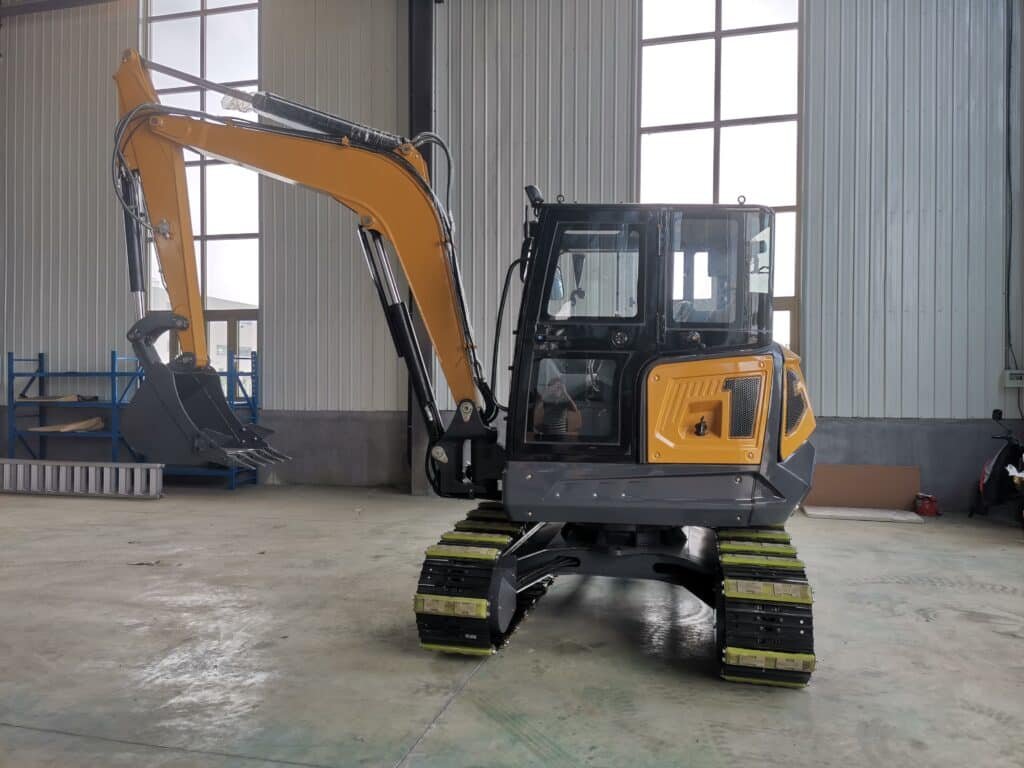
Q5) Do you need a cab? Or is a canopy enough?
- Canopy: cheaper, better visibility, great for mild climates.
- Cab: worth it if you have cold winters, rain, dust, or you’re using it often.
If it’s just weekend work and you have decent weather, a canopy is usually fine.
Q6) Is a retractable undercarriage useful for homeowners?
Yes—if you have narrow gates or tight access.
You can go narrow to fit, then go wide to feel stable when digging.
Just make sure the retract mechanism is protected so rocks don’t smash it.
Can It Fit and Can You Move It? (Q7–Q10)
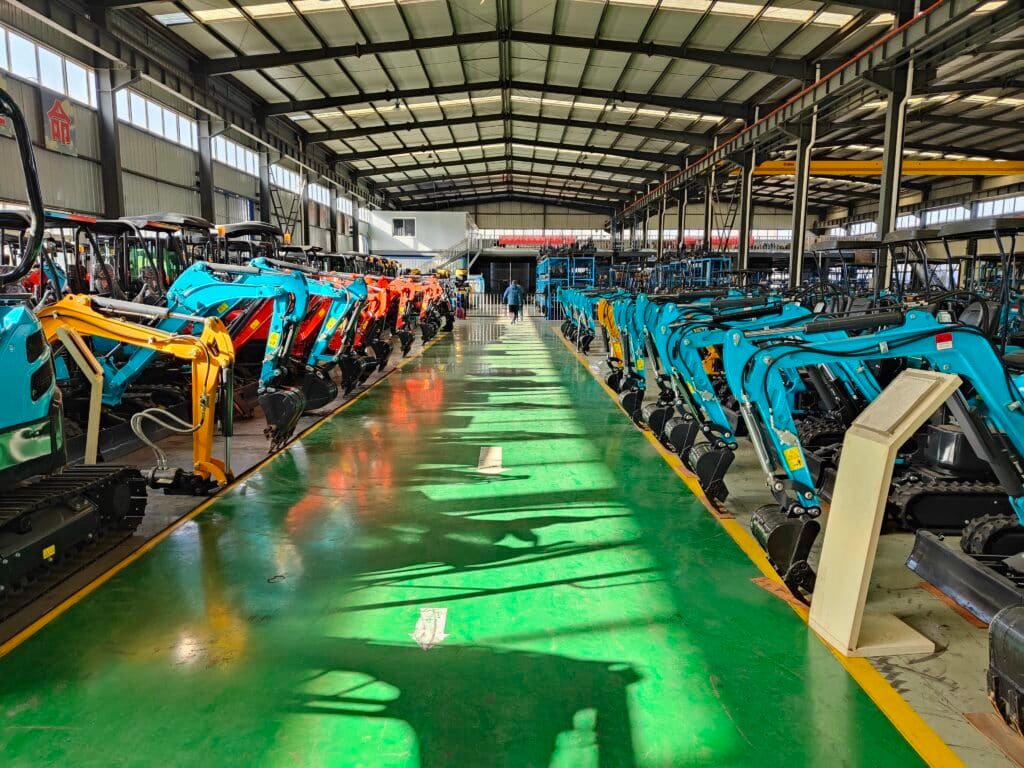
Q7) Will it fit through a garden gate or between buildings?
This is the first “real-life” question.
Measure:
- gate width
- path width
- tight turns
- slope and soft ground
Then ask the supplier for the minimum track width and confirm it’s the same for the model you’re buying.
Q8) Can a pickup truck tow it?
Sometimes yes, sometimes no—depends on:
- machine weight
- trailer weight
- local towing laws
- your truck rating
A 1–2 ton machine is easier for towing. A 3 ton plus trailer can get heavy fast.
If towing is critical, pick the machine size based on transport first, then productivity.
Q9) How do you load it safely?
Personal users should plan for:
- strong ramps rated for the weight
- a trailer with proper tie-down points
- chains/straps that are rated correctly
- learning how to balance the machine
Loading accidents happen when ramps are light or the trailer is too short.
Q10) Do you need a blade on a mini excavator?
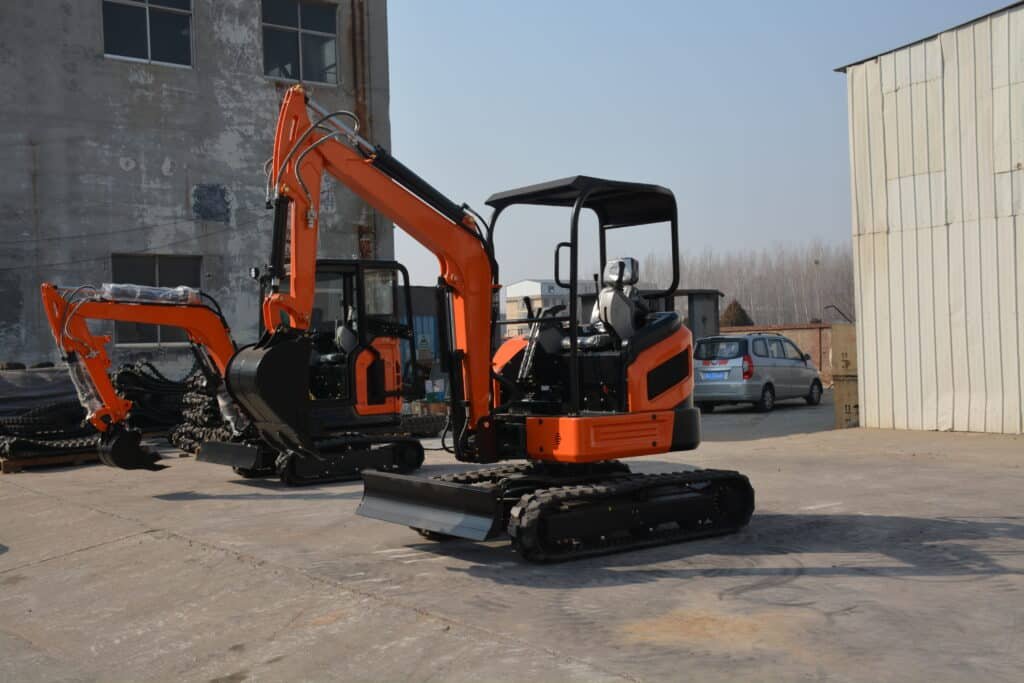
For property work: yes.
A blade helps with:
- leveling small areas
- backfilling trenches
- stabilizing the machine while digging
It’s one of those features you’ll use more than you expect.
Power & Hydraulics (Q11–Q15)
Q11) What does “strong hydraulics” actually mean for you?
It means:
- boom and arm don’t feel weak
- machine doesn’t stall easily when you curl the bucket
- movements stay smooth after the machine warms up
- attachments like thumbs or augers work without frustration
For personal users, “smooth and predictable” is often more important than “big numbers.”
Q12) What’s the difference between a machine that feels smooth and one that feels jerky?
Usually it’s about:
- how the hydraulic pump and valve are matched
- how the controls are set up
- overall assembly quality
A smooth machine is less tiring and safer—especially for beginners.
Q13) Is it okay if the machine is slower?
A little slower is fine for personal use.
But if it’s slow because it’s weak, that becomes annoying quickly, especially in hard soil.
A 2–3 ton usually feels much more confident than a 1 ton when the ground is tough.
Q14) Why do some minis “feel strong” at first but weak later?
Often heat. After 1–2 hours:
- hydraulic oil gets hot
- clearances change
- cheap components lose efficiency
- cooling can’t keep up
That’s why a supplier should be able to show the machine working continuously, not just a 30-second clip.
Q15) Gasoline or diesel for personal use?
- Diesel: common, good torque, efficient for digging.
- Gasoline: sometimes easier in certain places, but less common in minis.
Most personal buyers choose diesel because parts and service knowledge are widely available.
Attachments You’ll Actually Use (Q16–Q20)
Q16) What attachments are genuinely useful for a property owner?
The top 3:
- Ditching/cleaning bucket (wide, smooth)
- Thumb (hydraulic is best)
- Auger (fence posts, trees, footings)
These three turn a mini excavator into an “everything tool.”
Q17) Should you buy a quick coupler?
If you plan to swap buckets often, yes.
A quick coupler saves time and keeps you from skipping attachment changes because it’s annoying.
Q18) What’s the best bucket setup for a personal user?
A practical starter kit:
- one standard digging bucket
- one wide ditching bucket
- optional narrow trench bucket if you do utilities
Too many buckets sounds fun, but most owners end up using two.
Q19) Can you run a breaker (hammer) on a 1–3 ton machine?
Yes, but:
- breaker work heats oil
- it stresses pins and bushings
- you need the right auxiliary hydraulic setup
If breaker use is frequent, choose a stronger configuration and ask the supplier to confirm “breaker-ready” setup.
Q20) Is a swing boom worth paying for?
For working next to fences, walls, and buildings: absolutely.
It lets you dig alongside an obstacle without constantly repositioning the tracks.
Reliability: What Breaks First (Q21–Q24)
Q21) What are the most common issues personal owners see?
Usually small stuff:
- hydraulic hose rubbing and leaking
- loose fittings
- electrical connectors getting moisture
- cheap paint rusting early
- pins/bushings wearing if not greased
Most of these are preventable with good build and basic maintenance.
Q22) How can you tell if a machine is built “for real,” not just for looks?
Ask for:
- photos of hose routing on boom/arm
- photos before paint (weld areas)
- a short video of full movement and travel
- a checklist showing basic end-of-line testing
A serious factory can provide these quickly.
Q23) Does brand matter for reliability in Chinese minis?
Yes—but not in the “logo” way.
Brand matters because it often reflects:
- consistent parts sourcing
- repeatable assembly standards
- better QC habits
- better parts support
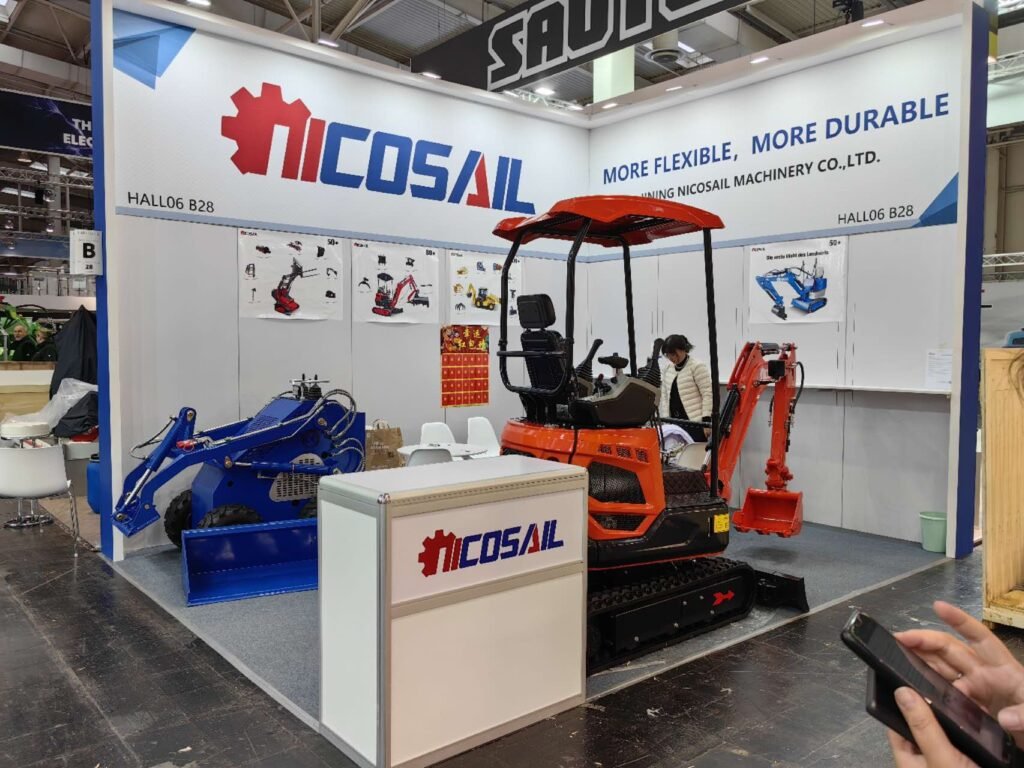
That’s why many buyers lean toward factory-backed brands like Nicosail—not for “status,” but because it’s easier to get consistent configuration and support.
Q24) How important is parts availability for personal users?
Extremely. If a hose or sensor fails and you wait weeks, the machine becomes yard decoration.
Before buying, ask:
- parts list and prices
- how they ship parts
- typical delivery time
- whether common filters are standard sizes you can buy locally
Maintenance: What Owners Must Do (Q25–Q28)
Q25) What maintenance is “must-do” for beginners?
Three simple habits:
- Grease daily (or every work session)
- Check for loose fittings and hose rubbing
- Keep radiator/cooler fins clean
This alone prevents most early failures.
Q26) How often do you change filters and fluids?
A safe personal-use routine:
- engine oil + filter: follow the manual (many do early first change)
- hydraulic oil: less frequent, but keep it clean
- fuel filter: change if fuel quality is unknown
The key idea: clean oil = long life.
Q27) What should you check before starting the machine each time?
- engine oil level
- coolant level
- obvious leaks under the machine
- track tension
- pins and bucket linkage for looseness
Two minutes of checking saves hours later.
Q28) What’s the easiest way to avoid rust and ugly paint issues?
- keep it clean (mud holds moisture)
- touch up scratches early
- store under cover if possible
- ask about surface prep and paint process before buying
Paint quality varies a lot, and it’s not just “cosmetic”—rust spreads.
Buying From China Safely (Q29–Q30)
Q29) How do personal buyers avoid getting the “wrong machine” shipped?
Do these three things:
- Ask for a final confirmed spec sheet with photos of the exact configuration
- Get a pre-shipment video showing serial number + full function test
- Use a third-party inspection if the purchase is large or you feel uncertain
Even for personal buyers, a basic inspection can be cheaper than fixing surprises.
Q30) What should be agreed before paying?
- exact model and configuration (engine, tracks, auxiliary lines, buckets)
- what’s included (toolbox, spare filters, manuals)
- warranty terms and parts process
- shipping terms and packaging method
- how after-sales communication works (who answers, how fast)
If a supplier can’t explain after-sales clearly, that’s risky.
Personal Buyer FAQ
FAQ 1) Is a China mini excavator okay for a beginner?
Yes—if it’s a stable size (often 2 ton) and has smooth controls. Practice in an open area first and learn safe loading and slope habits.
FAQ 2) Should you buy the cheapest one?
Cheapest often means more small issues: leaks, weak cooling, poor wiring, rough controls. A slightly higher-cost machine usually feels better for years.
FAQ 3) What size is best for farm drainage and trenching?
2 ton works well for most drainage trenches. If trenches are deep or soil is hard, 3 ton feels much faster.
FAQ 4) What’s the most useful “upgrade”?
A hydraulic thumb and a ditching bucket. You’ll grab logs, rocks, brush, and clean ditches way more easily.
FAQ 5) Can you get parts locally?
Some parts are universal (filters, hoses), some are model-specific (panels, certain valves). That’s why parts diagrams and supplier response speed matter.
FAQ 6) How long does shipping usually take?
It depends on destination and shipping method. The key is planning ahead—don’t buy right before your busy season.
FAQ 7) Is a cab worth it for personal use?
If you use it often in cold/rain/dust, yes. If it’s occasional work in mild weather, canopy is fine and simpler.
FAQ 8) What’s a simple “good sign” when talking to a supplier?
They answer with real photos/videos, clear specs, and straightforward parts support steps—no dodging, no vague promises.
Final Summary
For personal users, buying a 1–3 ton mini excavator from China is about choosing a machine that fits the property, is easy to move, and won’t turn into a maintenance headache. Most owners are happiest with a 2 ton for balance, or a 3 ton if soil is tough or attachments are common.
The smartest buying approach is asking practical questions about fit, towing, hydraulics feel, cooling, hose routing, parts availability, and after-sales response. Factory-backed suppliers—such as Nicosail—are often easier to work with because they can provide clearer configuration and more organized support, which matters a lot when the machine is for your own land and you just want it to work when you need it.