
Why a One-Day Field Test Matters
For many buyers in Europe, North America, and Australia, the biggest fear when sourcing from China is simple:
- “Will the machine last?”
- “Will it break during peak season?”
- “Are the certifications real?”
Especially for experienced buyers like Mark from Germany—who understands sales but not every technical detail—time is money. Waiting months only to find hidden issues is a disaster.
The truth is this:
A proper one-day field test can eliminate 70–80% of purchasing risk.
It won’t replace long-term durability testing, but it will clearly show whether the factory has real engineering discipline or just assembly capability.
Let’s walk step by step.
1️⃣ Before Starting the Machine: Visual Inspection
This is where experienced engineers can tell a lot without even turning the key.
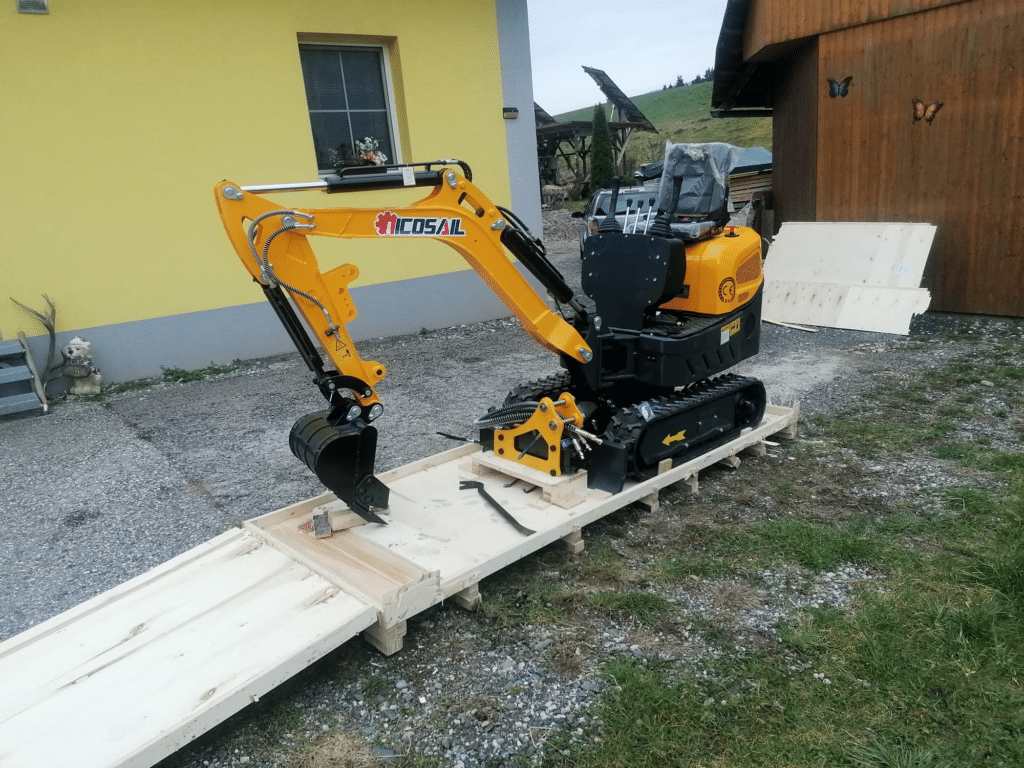
1.1 Welding Quality
Look closely at:
- Boom weld seams
- Arm joint welds
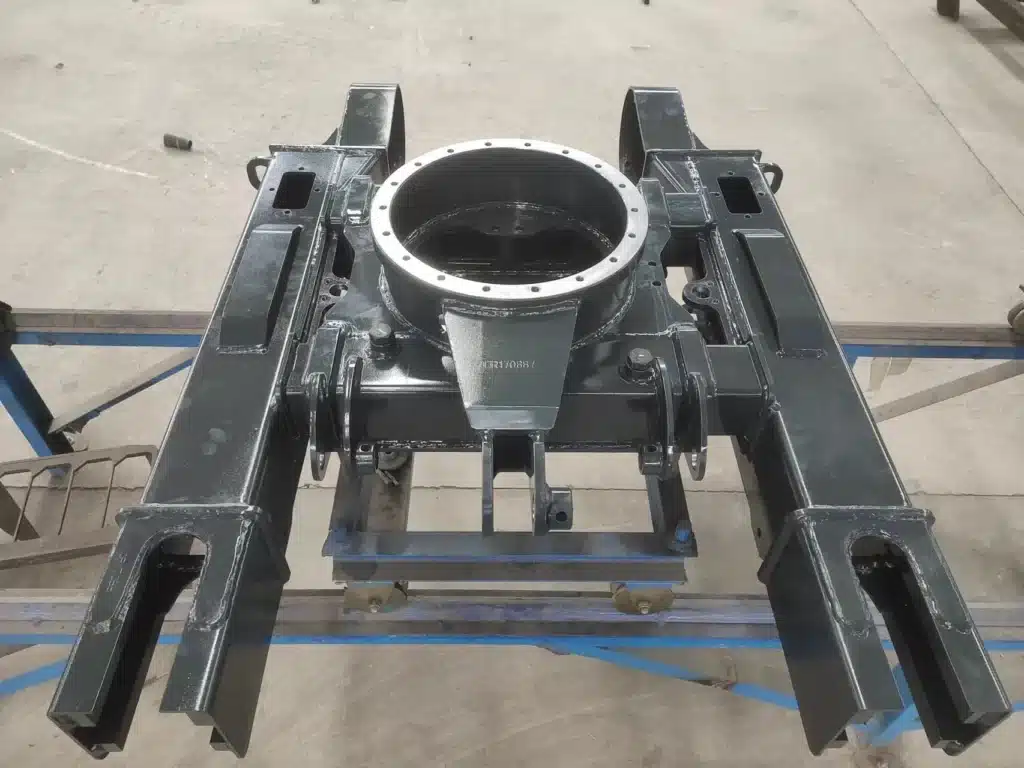
- Chassis frame corners
Good welding should look:
- Even
- Consistent width
- No bubbles or visible cracks
Messy welding usually means:
- Rushed production
- Low-skilled labor
- Weak structural durability
In factory data from mature production lines, failure rate of poor weld machines is 3–5 times higher after 1,000 working hours.
1.2 Hydraulic Hose Layout
Check if hoses:
- Are neatly arranged
- Protected with sleeves
- Avoid sharp bending
Bad hose layout = early leakage.
European rental companies often report that random hose routing leads to oil leaks within 300–500 hours.
A serious factory will plan hose paths during design stage — not after assembly.
1.3 Undercarriage & Track Tension
Check:
- Track alignment
- Grease leakage around rollers
- Steel thickness of frame
If the track already looks loose on a new machine, imagine after 200 hours.
1.4 Engine Compartment Cleanliness
Open the cover.
Ask yourself:
- Is wiring organized?
- Are clamps secure?
- Does it look rushed?
Factories that respect detail usually produce machines that last longer.
2️⃣ Cold Start Test – First 10 Minutes Matter Most
Never test a warm machine first.
Ask the supplier:
“Please keep it cold before I arrive.”
What to Observe:
2.1 Starting Time
- Should start within 2–3 seconds.
- Hard starting may indicate injector or compression issues.
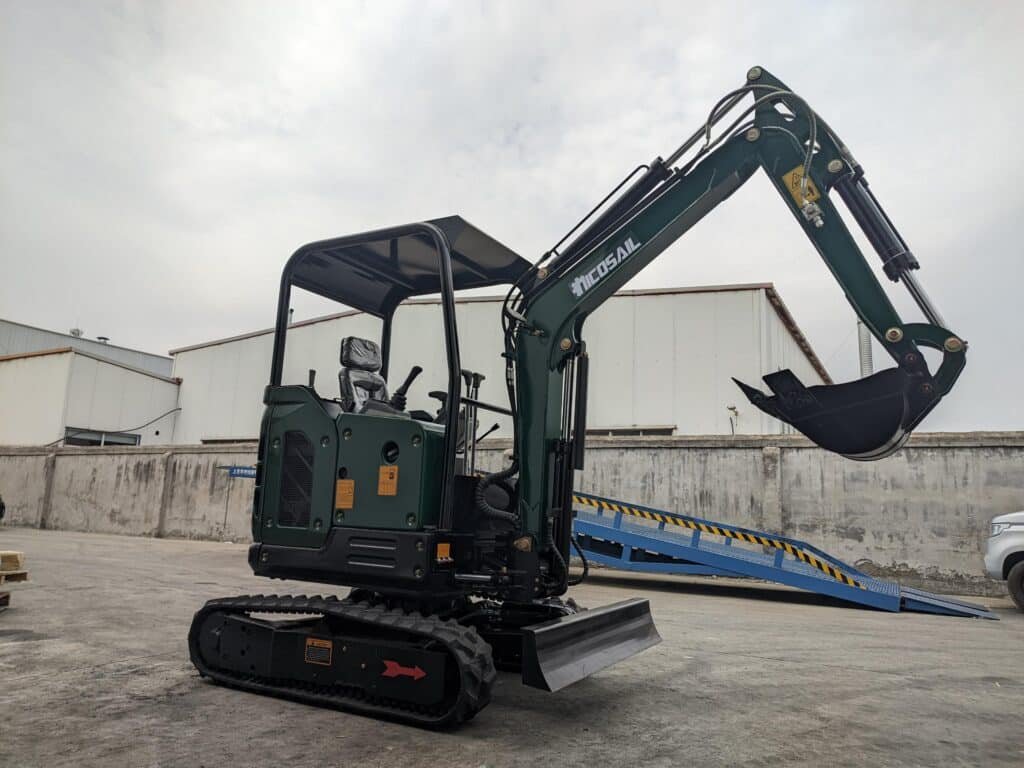
2.2 Exhaust Smoke
Small white smoke in cold weather is normal.
But:
- Thick black smoke = fuel system problem
- Blue smoke = oil burning
Good mini excavators using engines like Kubota or similar quality Chinese engines should run clean after 1–2 minutes.
2.3 Idle Stability
Let it idle 5–10 minutes.
Observe:
- Is RPM stable?
- Is there abnormal vibration?
Unstable idle usually points to engine tuning issues.
3️⃣ Hydraulic System Test – The Heart of the Machine
Hydraulic system is 50% of machine value.
3.1 Simultaneous Operation
Try:
- Boom up
- Arm pull
- Swing left
All at the same time.
Good system = smooth coordination.
Poor system = jerky movement.
Many low-end suppliers cannot properly tune hydraulic valves. The machine feels “nervous” or delayed.
3.2 Cylinder Leakage Check
After heavy digging:
- Stop machine
- Keep boom raised
If it drops quickly → internal leakage.
This is a serious issue.
3.3 Swing Motor Stability
Rotate 360 degrees repeatedly.
Listen:
- Grinding noise?
- Delay in stop?
Smooth swing means good machining precision.
4️⃣ Structural Strength Test – Don’t Skip This
4.1 Lifting Test
Lift heavy material close to max rated load.
Observe:
- Does machine tilt easily?
- Any frame deformation?
Good design balances center of gravity.
4.2 Digging Hard Soil
Don’t test only soft sand.
Ask for compacted soil.
Weak machines show:
- Abnormal noise
- Frame twisting
5️⃣ Continuous 2-Hour Working Test
Many issues appear only after 1–2 hours.
Monitor:
- Engine temperature
- Hydraulic oil temperature
- Power consistency
Overheating is common in low-cost builds due to poor radiator sizing.
A well-designed system keeps stable temperature under continuous load.
6️⃣ Electrical System Check
Look at:
- Fuse box labeling
- Connector waterproof level
- Light brightness
Electrical problems are the number one complaint in European rental fleets.
Loose connectors = future service headache.
7️⃣ Documentation & Certification Verification
This is extremely important for importers.
Check:
- CE declaration consistency
- Engine emission certificate
- Serial number matching
If documents hesitate or change format frequently — be careful.
Professional exporters provide documentation immediately and consistently.
8️⃣ Common Red Flags
Avoid suppliers who:
- Refuse cold start testing
- Rush field testing
- Avoid heavy digging demonstration
- Cannot explain hydraulic brand
- Cannot provide spare parts list
These signals often mean trading company without technical support.
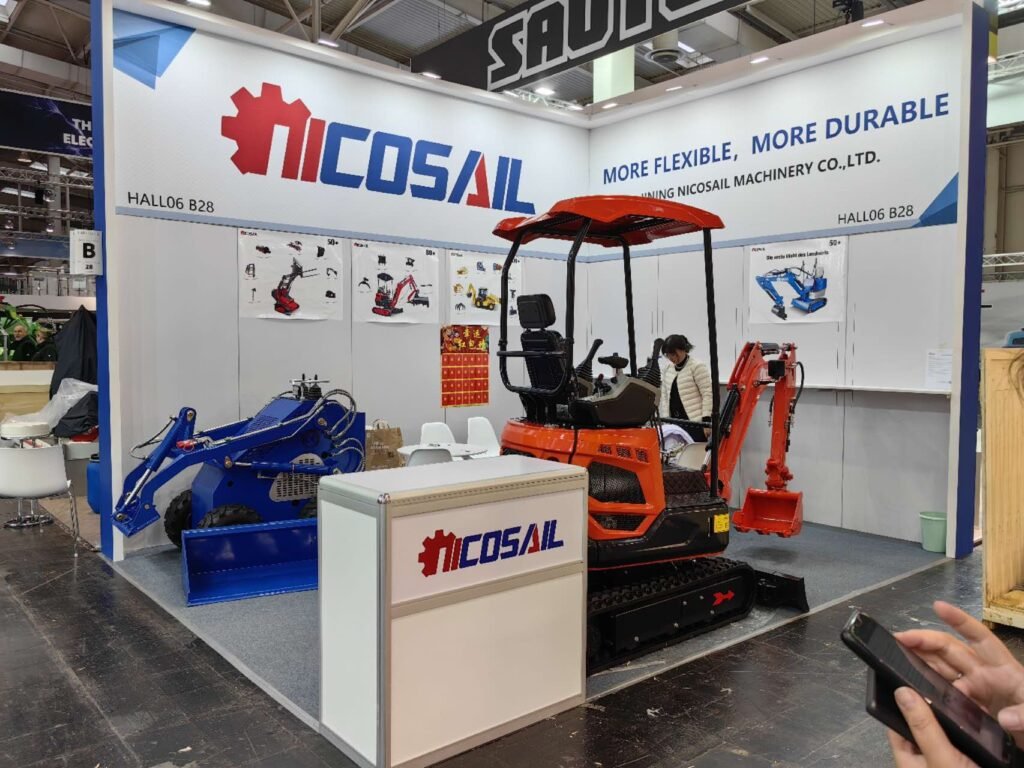
9️⃣ Why Many Dealers Evaluate Nicosail This Way
Experienced European dealers usually test Nicosail machines exactly using the checklist above.
What they notice:
- Stable hydraulic tuning
- Clean wiring harness layout
- Reinforced boom welding
- Transparent documentation process
Because it is a real factory participating regularly in international trade shows, production discipline is stronger than small workshops.
For B2B buyers who care about rebranding and resale margin, stable quality reduces after-sales cost significantly.
FAQ
Q1: Is one-day testing enough?
It cannot replace 500-hour testing, but it can remove most serious risks.
Q2: Should I bring my own technician?
If possible, yes. Especially for first cooperation.
Q3: What is the most important part to focus on?
Hydraulic smoothness and structural welding quality.
Q4: Are Chinese mini excavators reliable today?
Many factories have improved significantly. The key is choosing a real manufacturer with consistent export experience.
Q5: How long should delivery take?
Normally 15–35 days depending on production schedule and customization.
Final Thoughts
Buying a Chinese mini excavator is no longer about “cheap price.”
It is about:
- Engineering discipline
- Production consistency
- After-sales support
- Honest documentation
A structured one-day field test protects dealers, importers, and contractors from costly mistakes.
When evaluation is done properly, sourcing from China can be highly profitable and reliable.
Machines should work hard, not create problems.
The right inspection process makes all the difference.