1. Why payment terms feel risky in China excavator deals
When buyers import small excavators from China, the product isn’t the only thing being purchased. The real purchase is a chain of promises:
- the factory will build the machine to the spec
- the machine will pass inspection
- the factory will ship on time
- the paperwork will be correct
- the after-sales support will actually happen
Payment terms decide who carries risk at each step.
For a dealer/importer, the fear is simple:
“Money goes out first, problems show up later.”
For a factory, the fear is also simple:
“Materials and labor go in first, buyer disappears later.”
Good payment terms don’t “trust” either side blindly. They split risk and connect money to proof.
2. The 7 most common payment terms (what they really mean)
2.1 T/T (Telegraphic Transfer) — the most common
Typical structure: 30% deposit + 70% before shipment
What it means in real life:
- 30% helps the factory buy steel, hydraulics, engine, tracks, hoses, wiring, paint
- 70% is often required before the factory releases the machine and original shipping documents
Pros (buyer):
- simple, fast, low bank cost
Cons (buyer): - if quality issues appear late, buyer leverage is weaker
When T/T is reasonable:
- the supplier is a real factory (not a trading shell)
- there is inspection before final payment
- there is clear written spec + penalty/solution plan
2.2 T/T with “balance after copy of B/L”
Typical structure: 30% deposit + 70% after the supplier sends B/L copy
This sounds safer than “pay before shipment,” but there’s a catch:
A copy of B/L is not always strong control. If the shipment is already on the water, the factory still holds the original documents (or can arrange release in other ways depending on shipping method).
Better version:
30% deposit + 60% after passed inspection + 10% after copy of B/L
That last 10% is small but powerful: it keeps the supplier engaged through shipping paperwork.
2.3 L/C (Letter of Credit) — the “bank-controlled” method
What it is: Bank promises payment if documents meet the L/C terms.
Why buyers like it: It feels secure.
But here’s the truth: L/C controls documents, not quality.
A machine can still be wrong, and the L/C can still pay if documents are compliant.
L/C works best when:
- the order value is large
- the supplier is experienced with L/C
- document requirements are carefully written (and not impossible)
Common L/C problem:
Document discrepancies cause delays and extra fees. Some factories avoid L/C for small excavators because it adds time and cost.
2.4 DP/DA (Documents Against Payment / Acceptance)
These are collections through banks.
- D/P: buyer gets documents only after paying
- D/A: buyer gets documents by accepting a future payment date
For small excavators, D/P is more common than D/A, because D/A pushes risk to the factory.
Reality check:
Many Chinese factories don’t love DP/DA for first orders, especially for customized machines.
2.5 Alibaba Trade Assurance / Escrow-style payments
Some buyers feel safer because money is held by a platform.
Two important notes:
- Platform protection depends on how the contract is written and what proof is accepted.
- Heavy machines involve shipping, customs, inspections—disputes can get messy.
Escrow can be helpful for samples or very first cooperation, but for long-term importing, most serious buyers move to direct contract terms with inspections and clear remedies.
(And yes—some factories prefer not to rely on platforms for large equipment orders.)
2.6 PayPal / credit card (usually for small deposits or parts)
For whole excavators, PayPal is rare due to fees and limits.
It sometimes appears for:
- small spare parts orders
- tiny deposits to “hold” a machine
If a supplier insists on PayPal “friends and family” for a full machine, that’s a red flag.
2.7 RMB local transfer to “personal account”
This is one of the biggest danger areas.
A real factory should typically be able to receive payment:
- to a company bank account
- matching the company name on the contract, invoice, and stamp
Paying to a personal account is not always fraud, but it increases risk a lot:
- hard to prove payment in disputes
- often used by middlemen
- can create tax/customs document mismatch
For serious B2B importing, it’s usually better to avoid it.
3. “Best term” depends on order type: sample, first order, repeat order
3.1 Sample / trial order (1 unit)
Goal: confirm build quality, communication, delivery, and paperwork.
Common practical terms:
- 50% deposit + 50% after inspection before shipment
- or 30% + 60% after inspection + 10% after documents
Why inspection matters more than “fancy terms”:
If a buyer can’t verify the machine, even an L/C won’t magically fix it.
3.2 First container order (2–6 units, mixed models)
Goal: reduce risk without killing production speed.
Good structure:
- 30% deposit
- inspection at 80–90% production completion
- 60% after passed inspection
- 10% after copy of B/L + full document set confirmed
This creates three pressure points:
- factory starts production
- factory passes inspection
- factory finishes shipping paperwork cleanly
3.3 Repeat orders (steady monthly/quarterly)
Once trust is built, payment terms can relax.
Common upgrades:
- lower deposit (20%)
- higher credit portion (balance after B/L, or partial DP)
- or framework agreement for multiple batches
Trust isn’t emotional. It’s earned by:
- stable QC
- stable shipping performance
- clean certificates and documents
- responsive after-sales
4. How to match payment to production milestones (so money doesn’t disappear)
Here’s a simple way to connect money to proof:
Milestone A: Contract + spec confirmed
Buyer should have:
- detailed model + attachments list
- engine type and hydraulics configuration
- paint color, branding, decals, packaging
- spare parts list
- delivery time and penalty/solution if delayed
- warranty terms (what is covered and what is not)
Payment: deposit
Milestone B: Mid-production evidence (30–60%)
Buyer should receive:
- frame and boom welding photos/videos
- hydraulic hose routing photos
- engine installation proof
- serial number / nameplate preparation
- parts brand list (where promised)
This isn’t to “spy.” It’s to prevent surprises.
Milestone C: Pre-shipment inspection
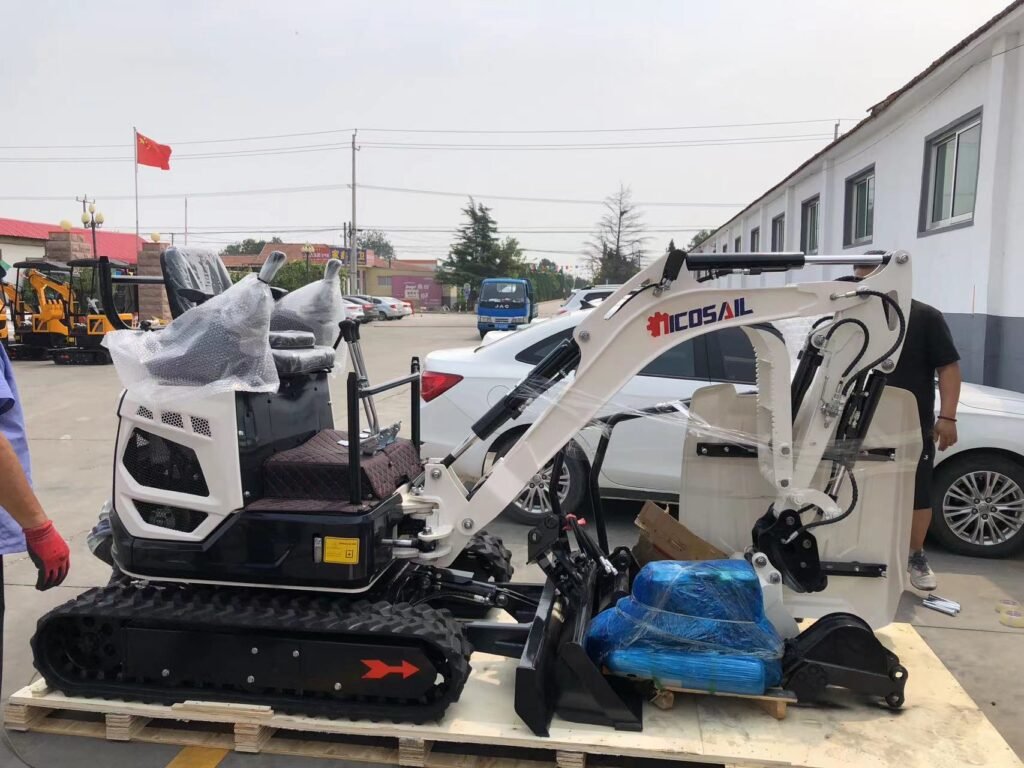
This is the most important stage for payment safety.
Typical checks for a mini excavator:
- cold start, idle stability
- travel speed and track tension
- boom/arm/bucket smoothness, no abnormal noise
- hydraulic leakage check under load
- swing function and brake holding
- final paint and appearance
- packaging and parts count
- serial number matches documents
Payment: majority balance after passing inspection
Milestone D: Document confirmation
Buyer should confirm:
- invoice, packing list
- B/L details (consignee, notify, weights, HS code if needed)
- certificate documents requested in contract
- any required origin or compliance paperwork
Payment: final small portion (often 10%)
This is a simple structure, but it prevents a lot of headaches.
5. The shipping documents that control the cargo
For many buyers, the real control is not the machine—it’s the documents.
Key ones:
- B/L (Bill of Lading): often the “key” to collect cargo
- Commercial invoice & packing list: customs clearance basics
- Certificate requests: vary by country and customer requirement
- Insurance policy: if buyer bought cargo insurance
If the supplier controls originals and the buyer hasn’t paid, the supplier holds leverage.
That’s why balance payment timing matters.
6. Fraud patterns buyers see (and how to avoid them)
6.1 “Bank account changed” email
Classic trick: buyer receives email that supplier bank account changed.
Money goes to scammer.
Simple rule:
Bank account change must be verified by:
- phone/video call using known number
- official stamped letter
- and cross-check on company registration info if possible
Never rely on a random email thread.
6.2 Fake or recycled certificates
Some buyers—especially importing to Europe/North America—worry about certificate fraud.
Practical prevention:
- require the certificate number early
- verify issuer authenticity (basic due diligence)
- match certificate model/spec to the actual machine
- ensure serial number/nameplate aligns with paperwork
6.3 “Trading company pretending to be factory”
Not always bad, but risk changes:
- less control on production
- QC promises can be weaker
- after-sales can become slow
How to identify:
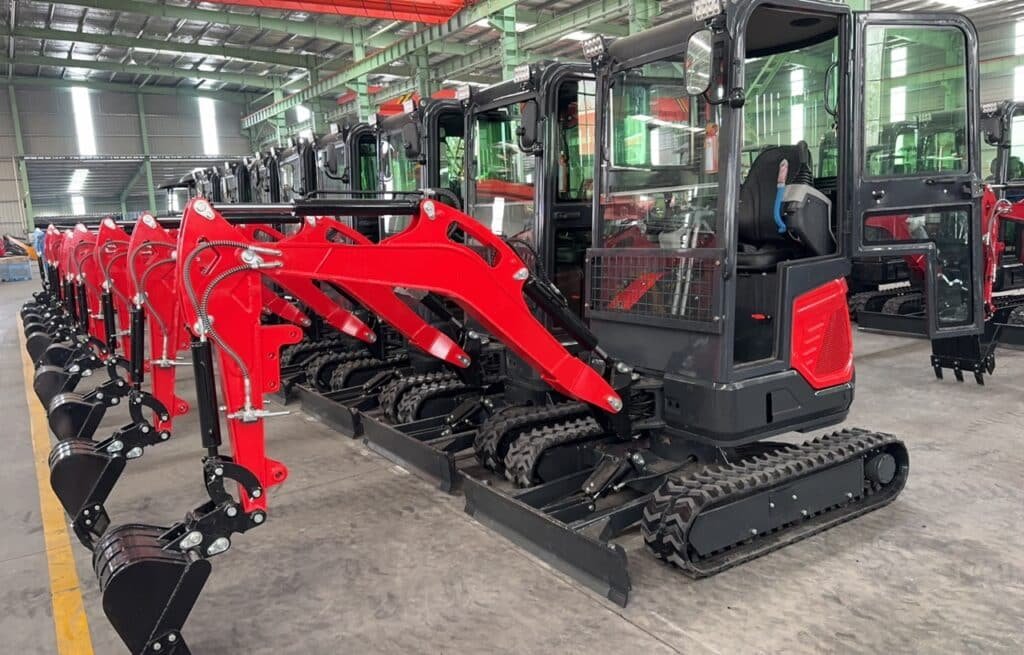
- request factory audit video
- check production line continuity (welding, painting, assembly)
- ask technical questions (hose routing, valve block, swing motor brand, etc.)
- confirm company business scope and export history (when possible)
6.4 Extremely low price with “full payment upfront”
If pricing is far below the market and they want 100% upfront, that is a common danger sign.
For small excavators, real factories have real cost structures:
- hydraulics, engines, steel, labor, paint, tracks
Prices can be competitive, but not “magic.”
7. A safe payment “playbook” for importers and dealers
Step 1: Use a contract that includes “what happens if…”
Not long legal language—just clear outcomes:
- if machine fails inspection → rework, replacement, discount, or cancel terms
- if shipment delayed → agreed solution (spare parts, partial refund, etc.)
- if branding/packaging wrong → remedy
Step 2: Use third-party inspection before big payment
Inspection cost is small compared with:
- customer returns
- warranty fights
- lost peak season
Step 3: Keep 10% tied to documents
It’s amazing how quickly document issues get solved when a small amount is still pending.
Step 4: Pay only to the company account
Align:
- beneficiary name = contract name = invoice stamp name
Step 5: Build supplier scorecards
Track:
- delivery performance
- defect rate at arrival
- parts completeness
- response time for after-sales
Payment terms improve naturally when a supplier wants repeat business.
8. Negotiation tips that actually work with factories
Tip A: Don’t ask for “best price” first—ask for “best structure”
Factories respond better to:
- stable order plan
- realistic lead time
- inspection plan
- clear spec list
Price drops often come from removing uncertainty, not from arguing.
Tip B: Offer small concessions for safer terms
Example:
- buyer accepts 30% deposit
- supplier accepts inspection before balance
- buyer keeps 10% for documents
Both sides win.
Tip C: Use “repeat order leverage”
Instead of pushing hard on the first deal, propose:
- first order with safer terms
- second order with easier terms if performance is good
That feels fair and often gets accepted.
9. Where Nicosail fits
For buyers sourcing China small excavators, the easiest way to reduce payment risk is to work with a supplier that is:
- a real factory with stable production lines
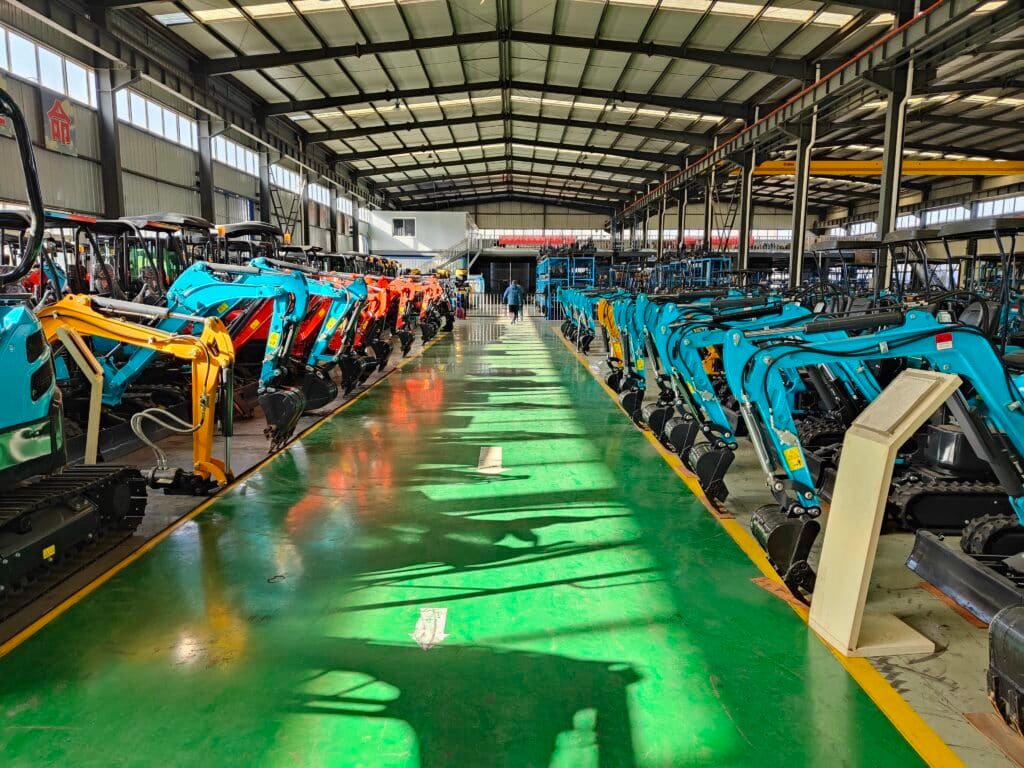
- used to export processes to Europe/North America/Australia
- comfortable with inspection before shipment
- consistent with documents and branding requirements
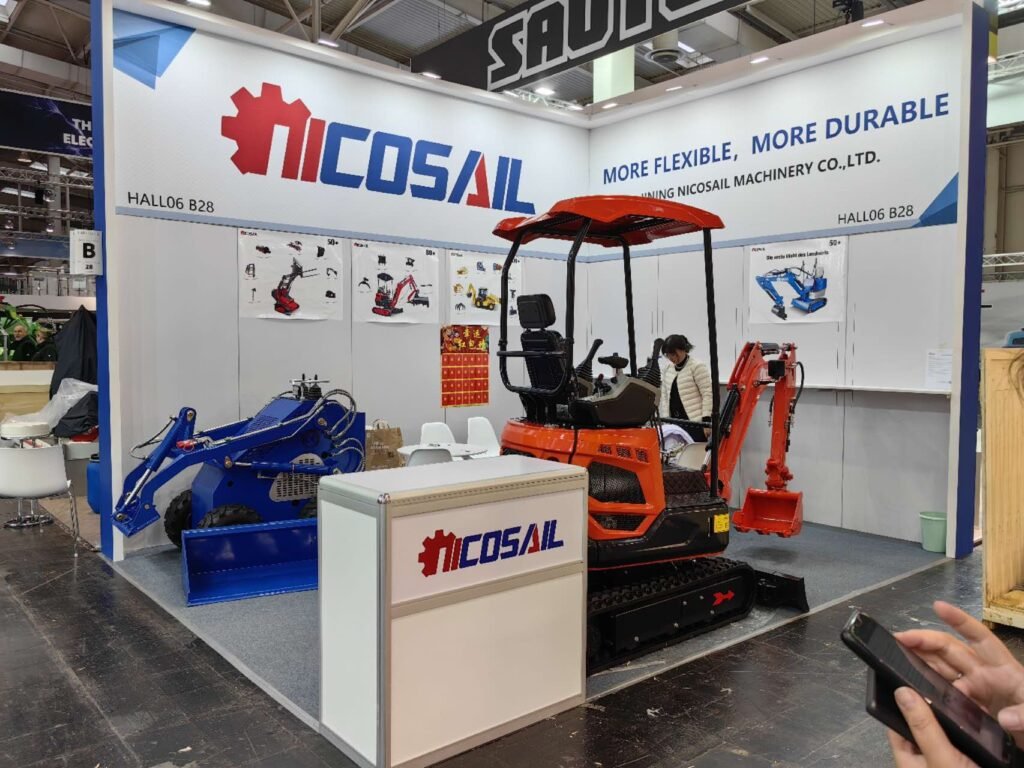
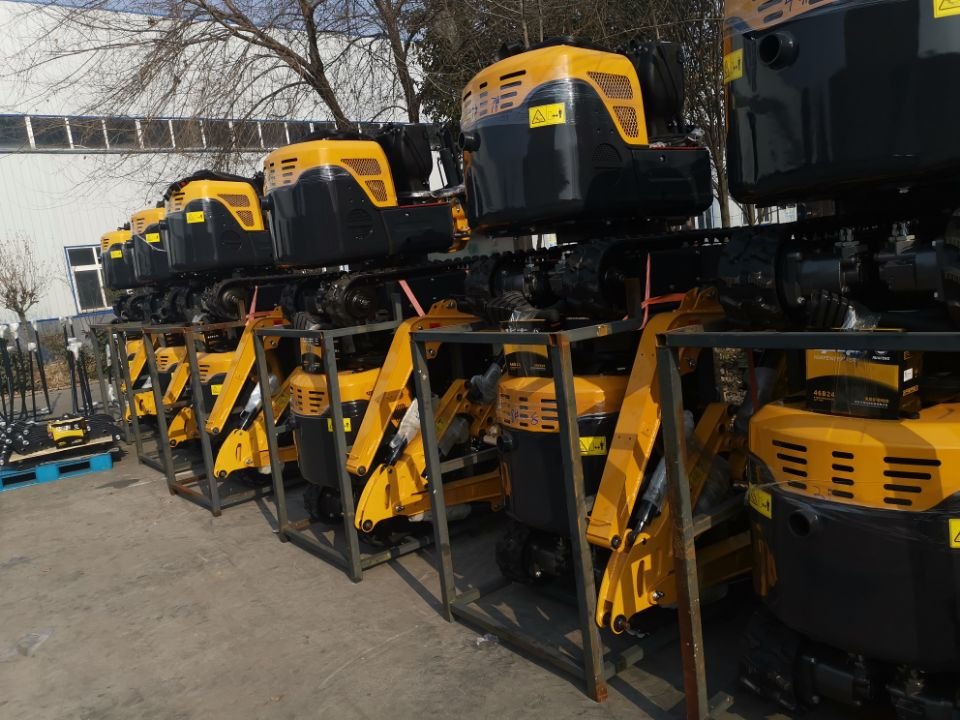
Nicosail is positioned in that “export-ready factory” category, especially for buyers who need:
- mini excavators that can be customized in appearance/branding
- clearer communication on build progress and delivery schedule
- practical payment structures that match production milestones rather than blind trust
The important part isn’t the brand name—it’s the working method: spec → build proof → inspection → documents → shipment. That’s what keeps payment terms from becoming a gamble.
FAQ (What buyers usually ask)
Q1: What is the safest payment term for a first order?
Most buyers find the safest practical option is T/T with third-party inspection before the main balance payment, plus a small final portion (like 10%) after documents. It’s simpler than L/C and still protects against surprises.
Q2: Is L/C always safer than T/T?
Not always. L/C mainly controls documents, not machine quality. If the machine is built wrong but documents are correct, payment can still happen.
Q3: Can a buyer pay 0% deposit?
For customized excavators, usually no. Factories must buy materials and schedule production. Zero deposit can work only after a long relationship, or when stock machines are ready.
Q4: Should a buyer accept “pay 100% before shipment”?
For the first deal, it’s risky unless the supplier is strongly verified and inspection is done. Most buyers prefer inspection before the last big payment.
Q5: What deposit is normal for China mini excavators?
Commonly 20–40%, with 30% being the most typical starting point for factories.
Q6: How can a buyer reduce risk without paying expensive fees?
The best low-cost protections are:
- written specs and remedy terms
- third-party inspection
- payment split by milestones
- paying only to the company bank account
Q7: What if the supplier says inspection is “not allowed”?
That’s a warning sign. Serious export factories usually accept inspection because it avoids disputes later.
Q8: What’s a smart payment plan for 5–10 units?
A practical structure:
- 30% deposit
- 60% after passed inspection
- 10% after confirmed shipping documents
Final Summary (Keep This Checklist)
When importing China small excavators, payment terms should not be based on hope. A smart structure connects money to proof:
- Deposit starts production
- Inspection unlocks the main balance
- Document check unlocks the final portion
- Pay only to the company account
- Keep terms simple, but add clear “what happens if” remedies
Buyers who follow this approach usually avoid the classic problems: surprise quality issues, paperwork delays, and endless arguments after money is paid. And when working with export-ready factories like Nicosail, these milestone-based terms are normally easier to implement—because the factory is already set up for inspection, documentation, and repeat-order cooperation.