
Modern farms do not only need horsepower. They need flexibility.
That is why mini excavators are becoming such a practical machine in agriculture. A tractor is still the main machine on many farms, no question. But there are plenty of jobs where a tractor is too big, too rough, or simply not accurate enough. A mini excavator steps into that gap. It can work in tight spaces, dig cleanly, switch attachments, and handle the kind of repair and maintenance jobs that never seem to stop on a real farm. Official manufacturer guides already list agriculture-friendly uses such as irrigation channels, drainage systems, land clearing, fence and infrastructure work, and tree or stump removal.
And this is exactly where China mini excavators have started to attract more attention. Buyers are not only looking at low price anymore. They are looking at a more practical question: can a Chinese mini excavator help a farm finish more jobs with less labor, less waiting, and less dependence on outside contractors? For many farms, especially small and medium-sized operations, the answer is yes—if the machine is chosen properly. Nicosail, for example, presents itself as a China-based mini excavator manufacturer and OEM supplier focused on export markets, which is the kind of factory model many dealers and farm buyers are now paying attention to.
The big advantage is simple. One mini excavator can do many farm jobs in one week: dig a drainage line on Monday, trench for irrigation on Tuesday, pull out old posts on Wednesday, clean a pond edge on Thursday, and help prepare a shed base on Friday. That kind of versatility is where the productivity jump really happens. It is not about replacing every machine on the farm. It is about giving the farm one compact machine that solves the annoying, slow, labor-heavy jobs faster and more neatly. Official equipment guides from Bobcat, Kubota, and Deere all emphasize mini excavators’ versatility, trenching ability, compact size, and suitability for work in tighter conditions.
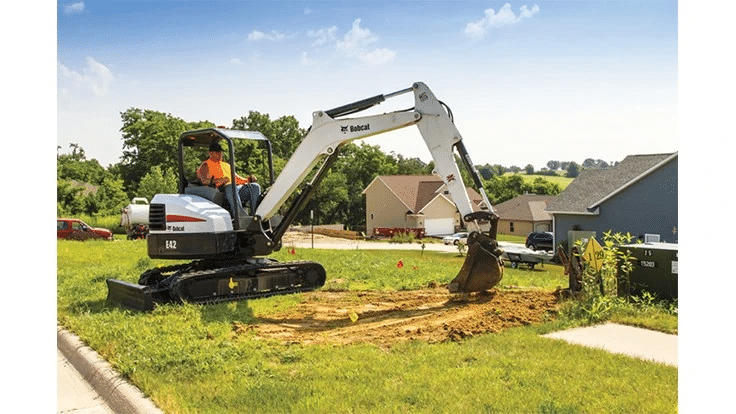
Why mini excavators are becoming so useful on farms
Farm work is full of small but important jobs. That is the real reason mini excavators fit agriculture so well.
A farm may not need a large excavator every day. In fact, on many farms, a large machine is too much. It is harder to transport, harder to store, more expensive to run, and often too heavy for everyday maintenance work around orchards, animal areas, lanes, gardens, greenhouses, and field edges. A mini excavator sits in a much sweeter spot. It gives digging power, reach, and attachment flexibility without bringing the size and cost of a big earthmoving machine. Manufacturer information consistently describes compact excavators as strong in digging, trenching, pipe placement, site prep, and precision work in confined areas.
For farms, that matters because productivity is not only about speed in the field. It is also about how quickly small problems get fixed before they become large expensive ones. A blocked ditch, a broken water line, a weak fence corner, a washed-out lane edge, or a shallow pond full of silt can quietly reduce farm efficiency for weeks. A mini excavator gives the farm a way to respond quickly instead of waiting for the right contractor to become available. Extension and conservation sources keep showing how drainage, ditches, pond maintenance, and farm infrastructure all need timely attention to avoid bigger operational problems later.
Why China mini excavators are getting attention in agriculture
The reason is not complicated. Many farm buyers want a machine that is compact, affordable, simple to operate, and easy to justify financially.
A premium global brand can be an excellent choice, but not every farm wants to tie up that much money in a machine used for mixed maintenance tasks. That is where Chinese mini excavators are finding room in the market. Buyers like the lower entry cost, the chance to add practical attachments, and in many cases the option to customize color, branding, or configuration for local resale. Nicosail’s own factory pages highlight OEM supply, export orientation, and multiple mini excavator options for distributors and bulk buyers, which matches what many B2B importers are looking for.
Of course, the smart way to buy is not to chase the cheapest machine. It is to match the machine to the real farm jobs. On farms, the best mini excavator is usually the one that starts easily, fits through tight access, has smooth hydraulics, accepts the right attachments, and can be maintained without drama. That is especially important for agricultural buyers, because farm machines are expected to do a lot of different work, often with little time for downtime. Official manufacturer material keeps stressing easy maintenance and attachment versatility for compact excavators, and those are exactly the points farm buyers should take seriously.
Use #1: Drainage ditching and water management
This is probably one of the most valuable uses on a farm.
Poor drainage quietly hurts productivity. It delays field access, weakens root health, creates standing water, damages lanes, and can make parts of a field harder to use. USDA-NRCS drainage references define field ditches and field drains as standard water-management features, and extension guidance for vegetable and orchard production makes it clear that getting excess water away quickly is critical for healthy crop growth and workable ground conditions.
A mini excavator is useful here because it can cut and reshape small drainage lines, reopen old ditches, clean outlets, and repair washed areas without bringing a large earthmoving crew onto the farm. On smaller farms, orchards, and mixed-use properties, that matters a lot. The machine can get into awkward spaces near trees, fences, lanes, and sheds where larger equipment struggles. Bobcat’s compact excavator guide specifically includes irrigation channels, ditches, and drainage systems among the practical farm uses for these machines.
What this means in real farm terms is simple: less standing water, faster recovery after rain, better field access, and fewer headaches in the wet season. That is a real productivity gain, even though it does not always show up as a flashy number on paper.
Why Chinese mini excavators fit this job well
For ditch maintenance and drainage correction, farms usually need control more than brute force. A compact Chinese mini excavator in the right size range can be a sensible fit because the work is often light to medium duty, repetitive, and spread across different corners of the property. That makes value, maneuverability, and attachment flexibility more important than owning the biggest machine in the county.
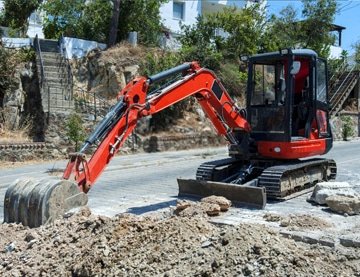
Use #2: Irrigation trenching and pipe installation
Water delivery is just as important as water removal.
Many farms need shallow or moderate trenching for irrigation pipe, feeder lines, small water systems, and orchard or garden infrastructure. Extension materials note that below-ground irrigation requires trenching, and orchard irrigation guidance highlights how important good system planning is for efficient water use. NRCS and university drainage and irrigation publications also show how trenching and pipe placement are part of ordinary farm water management.
This is where a mini excavator saves a huge amount of labor. Hand digging is slow and uneven. Larger machines can be overkill and may disturb too much ground. A mini excavator makes a cleaner trench, keeps the work line straighter, and lets the operator move quickly from one section to the next. Bobcat and Deere both point to trenching and pipe-related work as core excavator tasks, and that lines up perfectly with farm irrigation jobs.
For drip irrigation in orchards, garden plots, greenhouses, or specialty crops, that matters even more. Good trenching reduces wasted time, protects the line layout, and makes future maintenance easier. In practical terms, the farm gets a more organized water system and spends less time wrestling with improvised repairs.
Attachments that help
A narrow bucket is often the first choice here. Some buyers also like a grading bucket for backfilling and tidying the trench line after the pipe is laid. The point is not to turn the machine into a specialist pipe crew. The point is to let one compact machine handle the basic digging, cleanup, and backfill without bringing in extra equipment.
Use #3: Fence post holes and farm boundary work
Fencing jobs are endless on a farm.
There are livestock fences, orchard protection fences, perimeter lines, lane gates, paddock divisions, and repair work after weather or impact damage. Extension publications from Ohio State, Nebraska, Kentucky, and Arkansas all point to augers and powered post-hole equipment as major labor savers for fencing work, because drilling holes by hand over a long boundary is slow, tiring, and inconsistent.
This is one of the smartest uses of a mini excavator on a farm, especially when paired with an auger attachment. The machine can drill post holes, remove old concrete footings, pull stubborn posts, and help move fencing materials into place. Bobcat’s compact excavator guides specifically mention installing and maintaining fences and farm infrastructure, and they also note that augers are widely used in agriculture for fence posts, tree planting, and drainage-related work.
That means one machine can help with the full fencing workflow, not just the hole digging. It can clear the line, drill the hole, lift and place material, and clean up around corners and gate areas. For farms that regularly adjust paddocks, expand livestock areas, or repair storm damage, that is a big jump in productivity.
Why this matters for dealers and importers
For B2B buyers, this is also a strong selling point. A mini excavator marketed only as a digging machine sounds limited. A mini excavator sold as a farm utility machine for drainage, irrigation, fencing, stump work, and pond maintenance is far easier to position in the market.
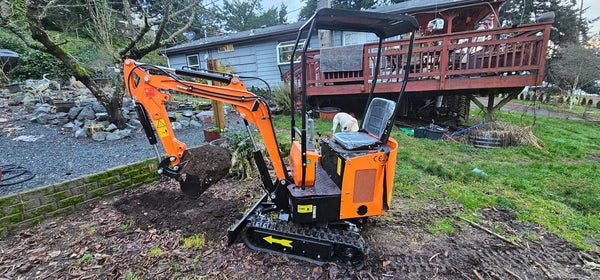
Use #4: Land clearing, roots, and stump removal
Every farm has rough corners.
There are old hedge lines, volunteer trees, shallow stumps, roots near lanes, scrub growth around field edges, and neglected corners that keep eating up time and space. Compact excavator guides from Bobcat specifically list land clearing, field preparation, and tree and stump removal among the key agricultural uses.
This is where a mini excavator becomes far more than a trenching machine. With the right bucket or grapple-style setup, it can pull roots, loosen shallow stumps, sort brush piles, strip back problem growth, and help open up land that has gradually become unusable. On smaller farms, that often translates directly into better access, cleaner field edges, and easier movement for tractors and trailers.
It is also one of those jobs that manual labor handles badly. A crew with shovels and chains can spend hours on a task that a compact excavator finishes in much less time. The result is not only faster work. It is cleaner work, with less strain and fewer half-finished problem areas left behind.
A practical point on machine size
For root and stump work, buyers should be realistic. An ultra-small mini excavator is fine for light vegetation and smaller roots, but bigger stumps and tougher ground need more stability and hydraulic strength. The best choice depends on whether the farm mostly handles light cleanup or heavier clearing around orchards, lanes, and older property lines.
Use #5: Pond digging, desilting, and bank repair
Water storage and pond upkeep are another big farm use.
Farm ponds are not just decorative. Texas A&M’s pond planning guide explains that farm ponds can serve irrigation and other farm purposes, and Clemson’s dredging publication shows that pond maintenance and desilting are major projects that directly affect pond performance over time.
A mini excavator helps in three main ways. First, it can shape small ponds or improve edges around water collection areas. Second, it can remove silt and muck from shallow sections where access allows. Third, it can repair or reshape damaged banks, inlets, and surrounding drainage points. This makes the machine useful not only when a pond is first created, but also through the ongoing life of the pond.
For a farm, that means more control over water management. It can support irrigation planning, reduce overflow trouble, and keep pond edges safer and cleaner. Bobcat’s compact excavator materials also include creating and maintaining ponds and water features among the suitable tasks for these machines, which fits well with real farm needs.
Why mini excavators work well here
A large excavator may still be necessary for bigger pond construction, but many farms do not need that scale every time. For maintenance, edge shaping, ditch-to-pond connections, and smaller water projects, a mini excavator often gives the right balance of reach, transport ease, and lower ownership cost.
Use #6: General farm construction and material handling support
This is the use many buyers underestimate.
A mini excavator is not only for digging holes. On farms, it often becomes the machine that supports all the awkward construction jobs: preparing a shed pad, cleaning around a barn foundation, helping place culverts, moving loose material, digging footing lines, repairing lane edges, and tidying around utility areas. Deere describes compact excavators as suitable for site prep, loading, trenching, and pipe placement, while Bobcat and Kubota also emphasize digging, lifting, precision, and attachment-led versatility.
That matters because farm construction is rarely one single clean job. It is usually a chain of small tasks. One minute the operator is scraping soil, the next minute lifting a pipe, then opening a trench, then backfilling around a footing. A mini excavator handles that kind of mixed work very well.
This is also why farms that buy one often find it busier than expected. The machine keeps getting pulled into small projects that used to be delayed or outsourced. That is where the real productivity leap comes from. Not from one dramatic job, but from dozens of small jobs getting done on time.
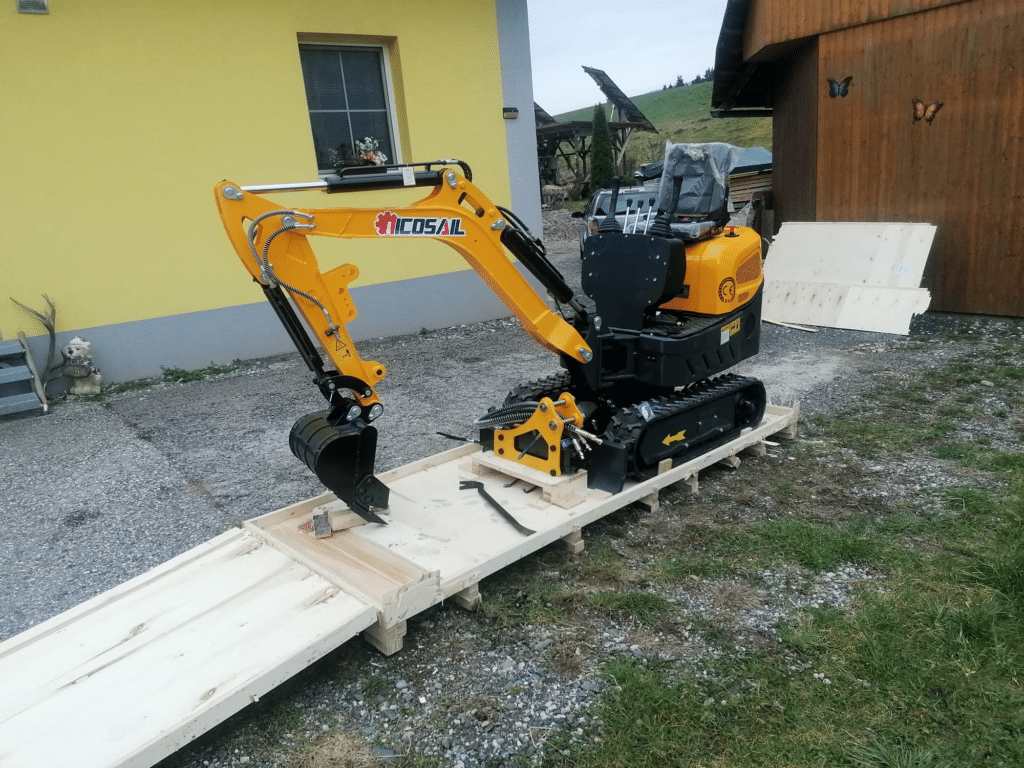
What farm buyers should look for before purchasing
A farm mini excavator should be chosen by job mix, not by brochure excitement.
First, look at the real work. If the farm mainly handles irrigation, fencing, and light ditching, a smaller machine may be enough. If the work includes stumps, pond maintenance, and regular heavier repair jobs, a larger mini excavator in a stronger weight class may be the better fit.
Second, think about attachments. For farms, the most useful combination is often a standard digging bucket, a narrow trenching bucket, an auger, and sometimes a grading bucket. Those four can cover a surprising amount of farm work.
Third, check maintenance access. A farm machine should be simple to inspect and simple to service. Easy grease points, filter access, and straightforward hydraulic layout save trouble later. Kubota’s materials specifically highlight easy routine maintenance on compact excavators, and that point matters just as much for Chinese machines.
Fourth, ask about parts and support. This is where many buyers make mistakes. A low-cost machine without dependable parts backup can become an expensive parked machine. For importers and dealers, this point matters even more than purchase price.
Where Nicosail fits in this market
Nicosail fits this topic best as a practical export-oriented option, not as a hard sell.
The company’s official pages position it as a China mini excavator manufacturer and OEM supplier, with a focus on export business, product options, and factory-backed cooperation for distributors and buyers. That is relevant because farm buyers and farm-equipment dealers usually want the same basic things: clear communication, workable configurations, customization when needed, and confidence that the supplier understands overseas business.
For this kind of article, the important point is simple. A farm mini excavator should not be chosen only because it is cheap. It should be chosen because it matches real farm tasks and comes from a supplier that can support those tasks properly. Nicosail is worth mentioning because it sits in that China factory-direct space many practical buyers are already exploring.
FAQ
Are mini excavators really useful on farms?
Yes. Official compact excavator guides already include farm uses such as drainage, irrigation trenching, fence installation, land clearing, stump removal, and pond work.
What is the most common farm job for a mini excavator?
Drainage and trenching are among the most common uses, because farms regularly need ditches, water-line work, and outlet maintenance. NRCS and university extension publications show how important drainage and water management are to farm performance.
Can a mini excavator help with fencing?
Yes. With an auger attachment, it can drill post holes much faster and more consistently than manual digging. Extension and farm safety sources specifically point to powered augers and post-hole equipment as major time savers in fence work.
Are China mini excavators a good choice for farms?
They can be, especially when the buyer wants a compact, cost-conscious, multi-use machine and chooses a supplier carefully. The key is to focus on the right size, attachments, maintenance access, and parts support.
What attachments matter most on a farm?
For most farms, a standard bucket, trenching bucket, auger, and grading bucket cover the most useful jobs. Bobcat’s attachment guidance also highlights augers for agriculture, fence posts, tree planting, and drainage work.
Can a mini excavator dig or maintain a farm pond?
Yes, especially for smaller pond projects, bank shaping, inlet work, and desilting in accessible areas. Pond planning and dredging publications show how important pond construction and maintenance are for farm water management.
Why mention Nicosail in this topic?
Because buyers looking at China mini excavators need factory-based options that understand export business, product configuration, and long-term cooperation. Nicosail’s official materials place it in exactly that kind of supplier category.
Final thoughts
The productivity leap from a mini excavator on a farm usually does not come from one giant project.
It comes from six kinds of everyday work getting faster and easier: drainage ditching, irrigation trenching, fencing, land clearing, pond upkeep, and general farm construction support. Those are the jobs that quietly eat labor, slow down repairs, and pull attention away from the main operation. A mini excavator gives the farm a practical way to get those jobs done on time.
That is why China mini excavators are getting more attention in agriculture. When matched to the right work, they can give farms a very sensible balance of cost, versatility, and daily usefulness. And for buyers who want a factory-backed option rather than a random low-price listing, brands like Nicosail are worth serious consideration.
The smart buying logic is simple: do not buy a mini excavator just to own one. Buy it because it can solve real farm problems, save labor, and keep the operation moving. That is where the real jump in agricultural productivity begins.